

Calgary wellness news · August 5, 2026
Calgary Healing Hands Releases an LI4 (Hegu) Acupressure Guide: What Readers Should Know
A new Calgary-made wellness guide explains the hand point known as LI4 or Hegu. Its most useful message is not a promise of a quick fix; it is a reminder to keep self-care gentle, understand the pregnancy caution and know when one point should not be asked to answer a health question.
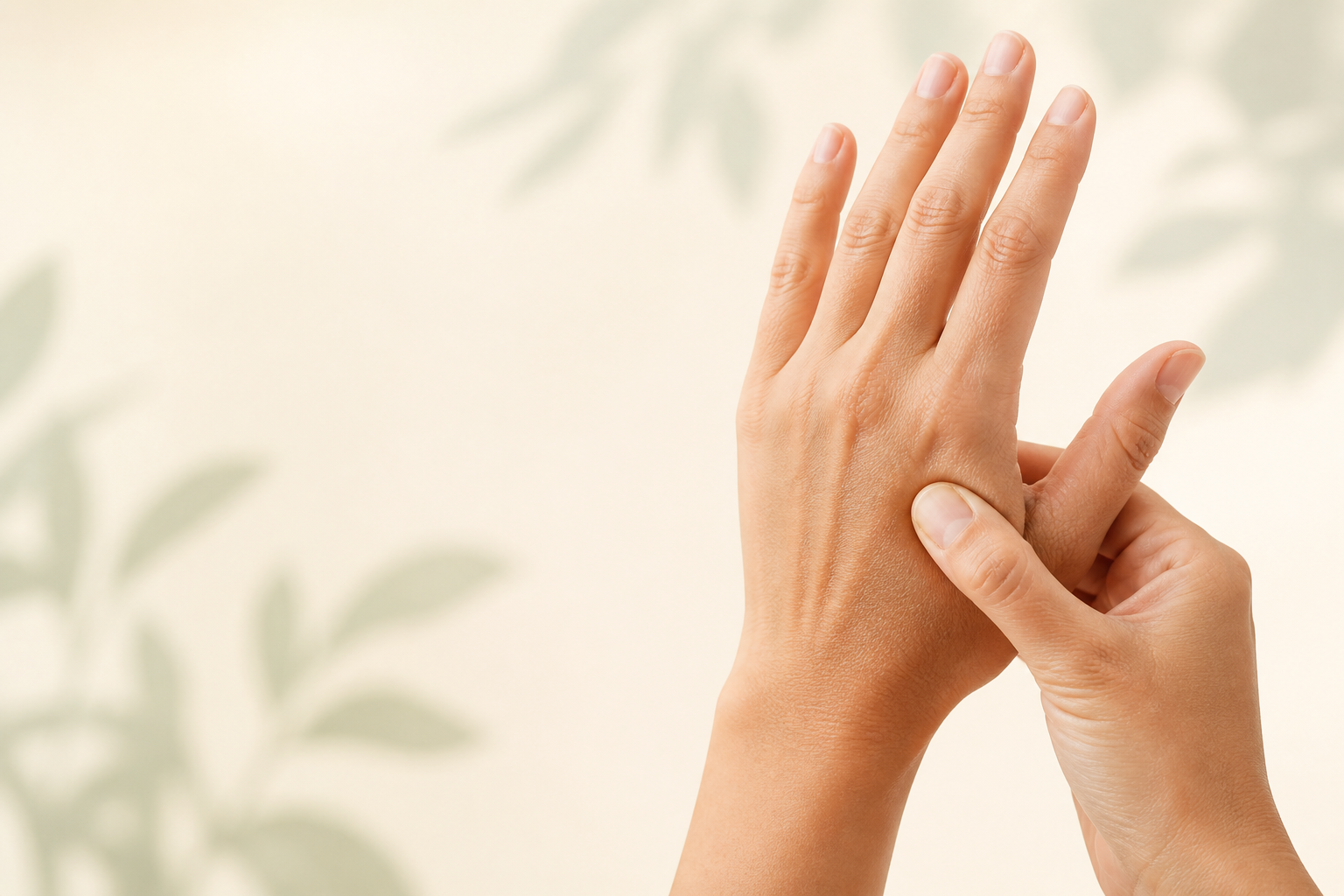
What happened: Calgary Healing Hands Wellness has published a new online explainer, “LI4 (Hegu) Acupressure Point: A Gentle Calgary Wellness Guide”. The post centres on a small area on the back of the hand between the thumb and index finger—one of the most recognizable locations in acupressure discussions—and takes a deliberately restrained approach. It shows readers how to find the general area, suggests brief comfortable contact rather than force, and places a clear caution around pregnancy and concerning symptoms.
That may sound modest for a new wellness resource. It is also the part worth paying attention to. A point that is easy to reach can be easy to oversimplify. Social posts and short videos often compress a traditional practice into a dramatic claim: press here, solve that. The Calgary guide goes in a more responsible direction. It separates a moment of personal comfort from diagnosis, advises people to stop if the area is painful or irritated, and directs people with a new, severe or changing concern back toward appropriate clinical care.
This is a local news and reader-information article about that publication. It is not a treatment instruction, a finding about any individual’s health, or an endorsement of self-treating symptoms. The distinction matters. Wellness information can be useful when it helps people ask better questions and make measured choices; it becomes unreliable when it turns one limited practice into a substitute for assessment.
At a glance
- The new resource: Calgary Healing Hands Wellness has released a locally focused page about the LI4, or Hegu, acupressure point.
- The core safety point: the guide says not to stimulate LI4 during pregnancy or possible pregnancy without specific advice from a qualified health professional.
- The sensible use case: a brief, comfortable self-care pause for familiar, mild tension—not a test, diagnosis or replacement for care.
- What readers should do next: read the source in full, do not press through pain, and seek clinical advice for symptoms that are new, severe, persistent, worsening or otherwise concerning.
What Calgary Healing Hands actually published
The new page is specific in subject and narrow in scope. It calls LI4 by its alternate name, Hegu, locates it in the soft hand area near the base of the thumb and index finger, and frames the point as something commonly discussed in traditional Chinese medicine and everyday tension conversations. The page does not ask a reader to diagnose a headache, pain, numbness or injury by using the hand point. It also does not present a point on the hand as a universal answer for whatever a person is feeling.
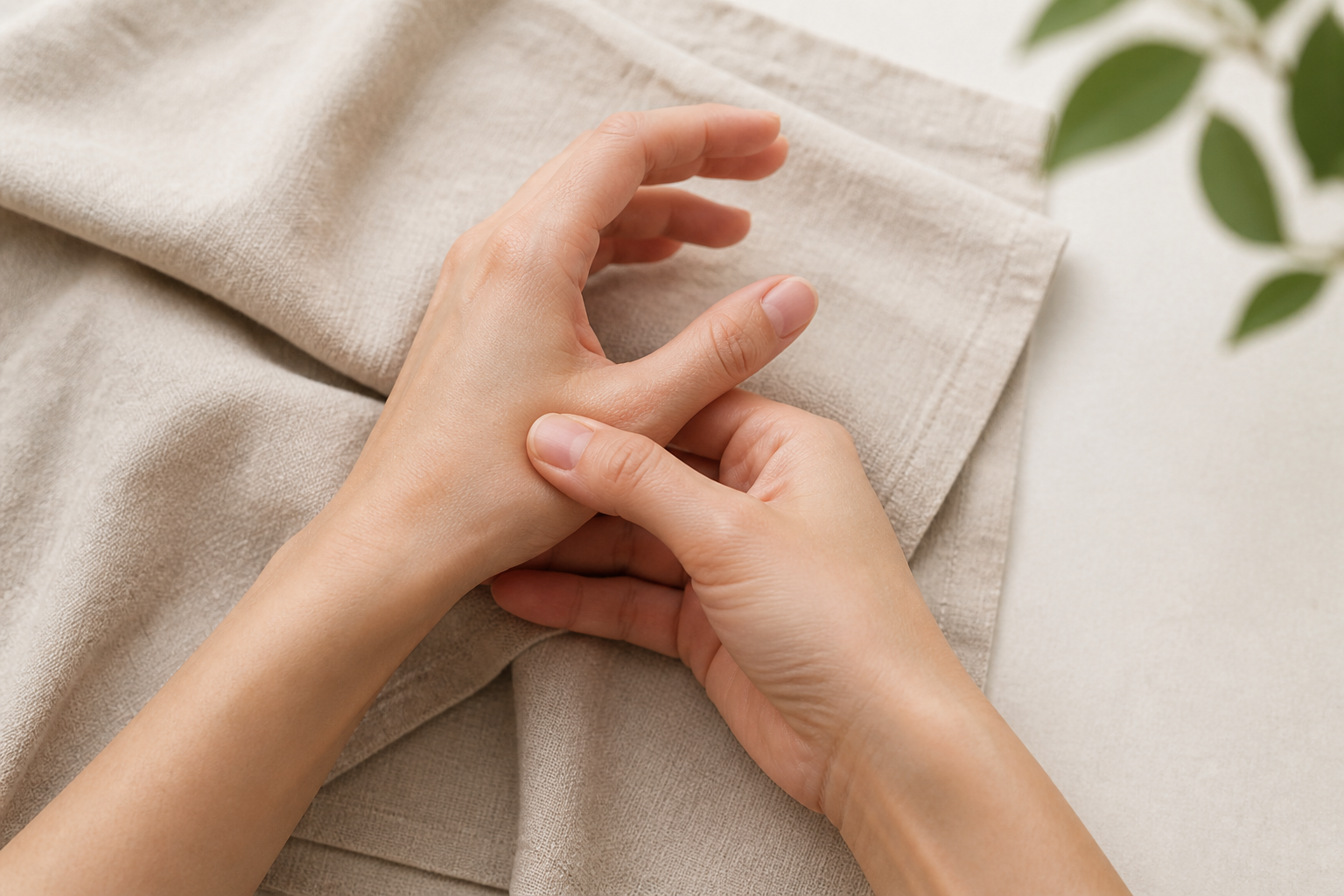
Its suggested routine is intentionally light: relax the hand, find the general web space, use only comfortable contact, breathe normally, stop if the area feels worse or unpleasant. In editorial terms, that tone is more important than the exact number of seconds in a self-massage routine. A reader who interprets discomfort as a sign to apply more pressure is moving away from the source’s actual message. The article repeatedly pushes in the other direction: comfort is the limit, and stopping is a valid outcome.
The source also tells readers to leave the area alone when nearby skin is compromised or looks inflamed, and it identifies circumstances in which a person should not rely on a pressure point. Those are basic guardrails, not an exhaustive triage system. They do, however, make the article more useful than a one-line “pressure point” tip because they give a reader permission to decide that self-care is not the right tool for the moment.
For Calgary readers, the local value is straightforward. The page links the basic educational topic to a clinic page where a prospective patient can learn about professional acupuncture and contact the team with questions before booking. That is different from claiming a particular therapy is necessary or appropriate for every reader. An information page can introduce a topic; an individual appointment, if a person chooses one, is where health history, current symptoms, preferences and suitability can be discussed.
There is also a useful editorial boundary here. YYC Today can report that the guide was published, describe its visible content and link to it. We cannot confirm a reader’s point location, identify the cause of a symptom or say what result any individual will experience. A responsible local feature should make those limits obvious rather than use the authority of a news-style page to make a wellness claim feel more certain than it is.
LI4, Hegu and the difference between a name and a promise
LI4 is commonly written as LI-4 and is also called Hegu. In the newly released guide, it refers to the area on the back of the hand between the thumb and index finger. The name is useful for finding reliable information, asking a practitioner a clear question or understanding why a clinic’s article includes a pregnancy caution. It is not, by itself, evidence that every use of the point has the same purpose, effectiveness or risk for every person.
That may seem like fine print, but it is a good way to read health information online. Terms from acupuncture and acupressure can carry a lot of cultural history, clinical practice variation and online folklore at the same time. A reader may encounter LI4 described in relation to tension, pain, headaches or labour. Those contexts are not interchangeable. What someone is trying to address, what else is happening medically, whether they are pregnant, and how the method is applied all change the conversation.
The National Center for Complementary and Integrative Health describes acupuncture as a technique involving fine needles and notes that the research picture varies by condition and study design. That is useful context even though the new Calgary page is about acupressure rather than a needle treatment. It is a reminder not to carry evidence or expectations from one setting automatically into another. A simple hand-pressure practice and a professionally considered acupuncture appointment are related in background, but they are not the same service, decision or evidence question.
For a reader, the practical takeaway is to keep language proportionate. It is reasonable to say that LI4 is a commonly discussed hand point. It is not responsible to use that statement to imply that pressing the spot reveals what is wrong, replaces a clinical examination, or guarantees relief. The new guide’s decision not to make that leap is one reason it can serve as a starting resource rather than an overconfident one.
Why a location guide is not a diagnostic map
Images can create a false sense of precision. A labelled hand illustration is a helpful orientation aid, but hands vary and the image cannot take account of swelling, injury, altered sensation, skin changes, a recent procedure or an individual’s health history. Even perfect point location would not answer the bigger question of why a person has a particular symptom. That distinction is especially important when online content is read quickly, outside the context in which it was written.
Readers should treat the illustration as they would a reminder to take a stretch break: a general piece of educational material, not a reason to postpone care they would otherwise seek. If a symptom has a worrying pattern, the sensible next step is not to keep experimenting with pressure. It is to use an appropriate health-care channel. In Alberta, people can contact Health Link at 811 for non-emergency health advice; emergencies require emergency services.
Why the safety language is the real news in this guide
The clearest line in the Calgary Healing Hands article is the pregnancy caution. It says people who are pregnant or could be pregnant should not self-stimulate LI4 unless a qualified health professional has specifically advised it. That wording is not buried in a footnote. It is an explicit section, and the clinic points readers to a Memorial Sloan Kettering patient guide that gives the same point-specific warning.
Pregnancy cautions are a good example of why a concise wellness article should not be read as a one-size-fits-all protocol. Some readers may see labour-related references online and assume that means the point is a casual at-home technique. The safer interpretation is the opposite: a labour-related association is exactly why a person who is pregnant, trying to conceive or unsure of pregnancy status should pause and ask the right clinician rather than experiment. The source does not tell readers to induce labour, manage a pregnancy symptom or replace prenatal care. YYC Today is not adding any such instruction.
The other safety language is equally practical. Calgary Healing Hands advises against using the area if skin is broken, blistered, swollen, hot, infected or otherwise irritated. It also advises readers to seek professional advice rather than rely on a pressure point for a sudden severe headache, unexplained pain, persistent numbness or weakness, new injury or worsening symptoms. Those examples are not a complete medical checklist, but they mark the crucial shift from a familiar, low-stakes comfort practice to a situation that deserves a proper assessment.
A simple rule for readers
If a symptom is new, severe, persistent, worsening, associated with weakness or numbness, or makes you worry that something more serious is happening, do not use an online point guide as your decision-maker. Seek appropriate medical advice. If you are pregnant or might be, do not self-stimulate LI4 without specific professional direction.
There is another safety point that is easy to miss: more pressure is not better pressure. The published guide uses words such as gentle and comfortable. A person should not chase intensity, make an area sore or interpret pain as proof that the practice is working. A wellness routine should be easy to stop. If touching the area is unpleasant, produces tingling or makes the situation feel worse, stopping is the sensible decision.
This restraint lines up with a broader principle in consumer health information. When a tool is low risk only under certain conditions, clear limits are part of its usefulness. Readers should not have to guess whether a “do it yourself” suggestion applies to them. The source makes its threshold visible: light contact for an otherwise appropriate person is one thing; pregnancy, compromised skin, concerning symptoms and escalating discomfort are reasons to step back.
A wellness routine is not the same thing as health care
One reason the new article deserves a careful news treatment is that “wellness” and “health care” are often blended together online. A person may use a brief breathing exercise, a walk or a hand massage as a moment of self-care. Those choices can coexist with medical, dental, physiotherapy, mental-health or prenatal care. They should not be presented as replacements for assessment when an issue calls for assessment.
Calgary Healing Hands’ guide uses this distinction well. It calls LI4 a possible part of a broader wellness routine, not emergency care and not a substitute for medical or dental assessment. It also explains that, in a professional acupuncture appointment, a practitioner can talk through goals, health history, symptoms and comfort level rather than treating one point as an answer in isolation. The key word is can: the page opens a conversation; it does not pre-judge whether a person should book or what a practitioner would recommend.
Readers should make the same distinction when comparing information sources. A clinic’s own educational page is a primary source for what that clinic says, offers and cautions. It is not independent proof of every possible benefit associated with a therapy. For broader evidence context, readers can look to public-health and research summaries. NCCIH, for example, says evidence around acupuncture differs by condition and notes both potential effects and limitations in the research. That is a more useful frame than either extreme: dismissing every wellness practice out of hand, or treating every claim as settled fact.
Being evidence-aware does not mean a reader must become a researcher before taking a quiet, comfortable pause. It means knowing when the stakes are low and when they are not. A person with familiar minor tension who is not pregnant and has healthy skin around the area may decide a brief, gentle check-in feels fine. A person with neurological symptoms, a serious headache, an acute injury, skin infection or a pregnancy question is dealing with a different decision. The point is not the correct next step for all of those situations.
What an online article cannot know about you
A webpage cannot take a history, verify what medication someone is taking, feel an injured hand, check circulation, distinguish a dental issue from a headache pattern or evaluate the meaning of numbness. It also cannot tell whether a person’s previous diagnosis still explains a new change. Those gaps are why even an excellent reader guide has to remain a guide. The thoughtful reader uses it to understand a term, learn a boundary and decide what question to ask next—not to reach a clinical conclusion.
That is especially relevant in a fast-moving local information environment. Calgary residents may find the guide through a search for “LI4 acupressure point Calgary,” an Instagram post, a recommendation from a friend or a quick late-night question. Search terms are not medical histories. A search page can be a doorway to reliable information, but the next step should be shaped by the individual’s circumstances, not by the confidence of a headline.
How Calgary readers can use the new guide without overusing it
The most practical way to use the published resource is to read it from top to bottom before trying anything. Start with the pregnancy caution and the “when to skip self-massage” section, not the illustration. If those boundaries do not clearly fit your situation, stop there and seek advice. That is not a failure to use the guide; it is using the guide as intended.
If the boundaries do fit, keep expectations narrow. A short, gentle self-care pause may be meaningful because it gives someone a moment to notice how they feel and decide whether to rest, hydrate, change posture or step away from a screen. It does not need to carry a large promise to be worthwhile. The guide’s language supports exactly that kind of proportion: calm, limited and reversible.
It is also useful to separate information from marketing pressure. A reader should be able to access the article, understand its caution and decide not to book anything. At the same time, someone who wants to know more about professional acupuncture in Calgary can review the clinic’s service information and ask specific questions. A transparent business feature should preserve both choices. The clinic can describe its own service; the reader keeps control over whether the information is relevant.
- Is this for mild, familiar discomfort, or is something new, serious or changing?
- Does the source give a reason not to try it in pregnancy, with skin changes or under other circumstances?
- Am I treating the suggestion as comfort, or am I quietly using it to avoid care I may need?
- Would it be easy to stop if it feels uncomfortable?
- Do I know who to contact if I am unsure?
Those questions are not unique to acupressure. They apply to many wellness recommendations, from stretches to over-the-counter products to at-home recovery routines. The value of the LI4 guide is that it gives a real local example of a resource that names its limits. The value for readers is learning to look for that same clarity everywhere else.
What “Calgary” adds—and what it does not
The local connection is not a claim that Calgary residents have different hands, different symptoms or a special need for one pressure point. It means the source comes from a Calgary wellness clinic and connects the topic to a nearby way to ask questions or discuss professional care. Local context can reduce the gap between a broad internet search and a real conversation. It does not turn a local page into a diagnosis or make it more appropriate to self-manage concerning symptoms.
That distinction helps keep local SEO honest as well. A useful Calgary article should answer the reader’s local question—who published this, what does it say, what does the clinic offer and what cautions should someone notice—without manufacturing city-specific medical claims. The article you are reading does not claim that LI4 resolves a Calgary health problem. It reports on a Calgary-published guide and adds the consumer-safety context needed to read it responsibly.
If you are considering an appointment, questions matter more than assumptions
The clinic’s source page distinguishes self-massage from a professional acupuncture appointment. For someone interested in the latter, the first useful step is not to assume a course of care or an outcome. It is to ask questions. A clear conversation protects both the potential patient and the provider: it sets expectations, surfaces relevant health details and makes room for a person to decide that another form of care, a different timing or no appointment is the better choice.
A person can ask what information the practitioner needs before a first visit; whether a current symptom, pregnancy status, skin issue, medication or diagnosis changes the conversation; what the appointment involves; whether the practitioner thinks the concern should first be assessed elsewhere; how comfort and consent are handled; and what follow-up, if any, might be discussed. These are decision questions, not promises. A credible answer may include a referral back to another clinician, and that is a sign of appropriate boundaries rather than a sales failure.
It is also reasonable to ask the office about practical matters before booking: location, timing, fees, direct billing if offered, cancellation policies and what to bring. Those points do not determine medical suitability, but they help a reader plan. The new CHH guide provides a path to its service and contact pages. Any decision to book should follow a direct conversation with the clinic, not an inference from a news article or a search result snippet.

Calgary Healing Hands Wellness
Learn about the source guide and clinic
The source for this feature is Calgary Healing Hands Wellness. Its published guide covers LI4/Hegu location, gentle self-care boundaries, a pregnancy caution and when self-massage is not appropriate. The clinic lists acupuncture, massage and wellness services in SE Calgary.
Phone: 587-917-7882
Email: service@calgaryhealinghandswellness.com
Why a careful, limited guide is more useful than a viral claim
There is an understandable appeal to quick wellness content. It promises a simple action in a complicated moment. The problem begins when simplicity becomes certainty. A reader may be dealing with an everyday tension pattern, but they may also be dealing with a dental condition, a neurological symptom, a medication issue, an injury, a pregnancy question or something else entirely. An image of a hand cannot sort those situations. A qualified clinician may be able to help sort them; a short online guide cannot.
That is why this Calgary Healing Hands publication is most valuable as a model of boundaries. It teaches readers a term and a general location, but it also says when to refrain. It suggests light contact, not force. It gives a meaningful pregnancy caution rather than a vague disclaimer. It directs readers with concerning symptoms to proper advice. And it links to a professional-service conversation without claiming that the service is the answer for everyone.
For local readers, that is a better standard to expect from any business publishing wellness information. Good content should tell you what it can responsibly cover, what it cannot determine and where you can go next. It should not make you feel that a click, a product or a booking is the only valid next step. In a sector where words like relief, balance and healing can be broad, specificity and restraint are signs that a resource is taking the reader seriously.
Frequently asked questions about the new LI4 guide
Is LI4 another name for Hegu?
Yes. The new Calgary Healing Hands article uses LI4 (also written LI-4) and Hegu for the same commonly discussed hand point. The name helps readers find the source page and understand its specific caution. It does not imply that all health concerns should be managed through that point.
Where is the point discussed in the guide?
The source places it in the fleshy web space between the thumb and index finger, on the back of the hand. Its image is a general orientation aid. If you are unsure whether self-care is appropriate, do not turn point-finding into a reason to push through discomfort or postpone professional advice.
Can I use LI4 if I am pregnant?
Do not self-stimulate LI4 during pregnancy or if you may be pregnant unless a qualified health professional has specifically advised it. The source highlights this precaution, and its linked Memorial Sloan Kettering patient resource gives the same warning. For pregnancy-related questions, ask your own prenatal-care team rather than relying on a general web article.
Should the hand pressure hurt?
No. The Calgary guide stresses light, comfortable contact. Pain, numbness, tingling, increased irritation or a feeling that something is wrong are reasons to stop. More force is not a better version of the practice.
Can this replace care for a headache, jaw problem, injury or pain?
No. The source says a pressure point is not a diagnosis or treatment plan. New, severe, ongoing or worsening symptoms deserve appropriate professional assessment. A reader should not use the guide to decide that a concerning symptom has been explained.
Is acupressure the same as acupuncture?
They are not the same thing. Acupressure generally involves pressure on selected body locations; acupuncture involves fine needles placed by a practitioner. The CHH guide is about a gentle self-care point discussion, while its acupuncture service page concerns a professional appointment. Do not transfer claims, safety assumptions or expectations automatically from one to the other.
What is the right next step if I want more information?
Read the original Calgary Healing Hands guide, review the clinic’s service information if relevant, and contact the clinic with practical or suitability questions. If your question is about a serious, new, persistent or changing symptom, start with an appropriate medical resource instead. Alberta residents can call Health Link at 811 for non-emergency health advice.
Sources and editorial note
- Calgary Healing Hands Wellness: LI4 (Hegu) Acupressure Point: A Gentle Calgary Wellness Guide — source of the local publication, its stated self-care boundaries and supplied illustrations.
- Memorial Sloan Kettering Cancer Center: Acupressure for Pain and Headaches — point-location and pregnancy/skin caution context referenced by the local guide.
- National Center for Complementary and Integrative Health: Acupuncture: Effectiveness and Safety — broader evidence context; it is not a recommendation for a specific reader.
- Alberta Health Services: Health Link 811 — non-emergency health advice route for Albertans.
Editorial note: This feature reports on a business-published wellness resource. It does not provide medical advice, diagnose conditions or guarantee outcomes. If you have an urgent or emergency concern, seek emergency help; for non-emergency health advice in Alberta, contact Health Link 811.