

Calgary winters test home systems in ways that no other season does. When temperatures drop to -25 or -30, the plumbing and heating infrastructure that keeps a home livable is under genuine stress — and the homeowners who arrive at January in the best shape are the ones who took winter preparation seriously before the cold arrived. Preparation is dramatically cheaper than emergency response, and in Calgary’s climate, the difference between a prepared home and an unprepared one shows up in utility bills, repair costs, and occasionally in a very bad night when a system fails at the worst possible time.
This guide covers the essential winterization steps for Calgary homes — the plumbing preparation, heating system maintenance, and mechanical checks that give homeowners the best chance of getting through winter without an emergency call. It is organized by urgency and sequence, because timing matters when Calgary’s first hard freeze can arrive without much warning.
Plumbing Winterization: What Needs to Happen Before the Freeze
The most urgent plumbing winterization task is addressing any pipes that run through unheated or poorly heated spaces — exterior walls, crawl spaces, garages, and unfinished areas where insulation may be inadequate. These are the pipes that freeze first when temperatures drop significantly, and a frozen pipe does not just stop water flow — it can burst, causing flooding damage that is expensive and disruptive to remediate. In Calgary’s older housing stock, pipes in exterior walls that were inadequately insulated during original construction are a consistent vulnerability that homeowners often do not know about until they experience a problem.
Exterior hose bibs — the outdoor faucets where garden hoses connect — need to be shut off from the interior shutoff valve and drained before the first freeze. Standard hose bibs that are not the frost-free type will freeze and potentially burst if water is left in them. Even frost-free hose bibs require that hoses be disconnected before winter, because a connected hose traps water in the bib and defeats the frost-free design. This is one of the simplest and most commonly overlooked winterization steps, and the failure point is consistently the same: a homeowner who forgets to disconnect the hose before leaving for a late-season trip.
If your home has a main water shutoff, confirm that it operates freely and that you and all household members know where it is and how to use it. In the event of a burst pipe or plumbing emergency, getting to that shutoff in the first thirty seconds determines how much water damage results. Many Calgary homeowners have never tested their shutoff valve and discover, during an emergency, that it is stuck, leaking, or inaccessible behind stored items.
Furnace and Heating System Preparation
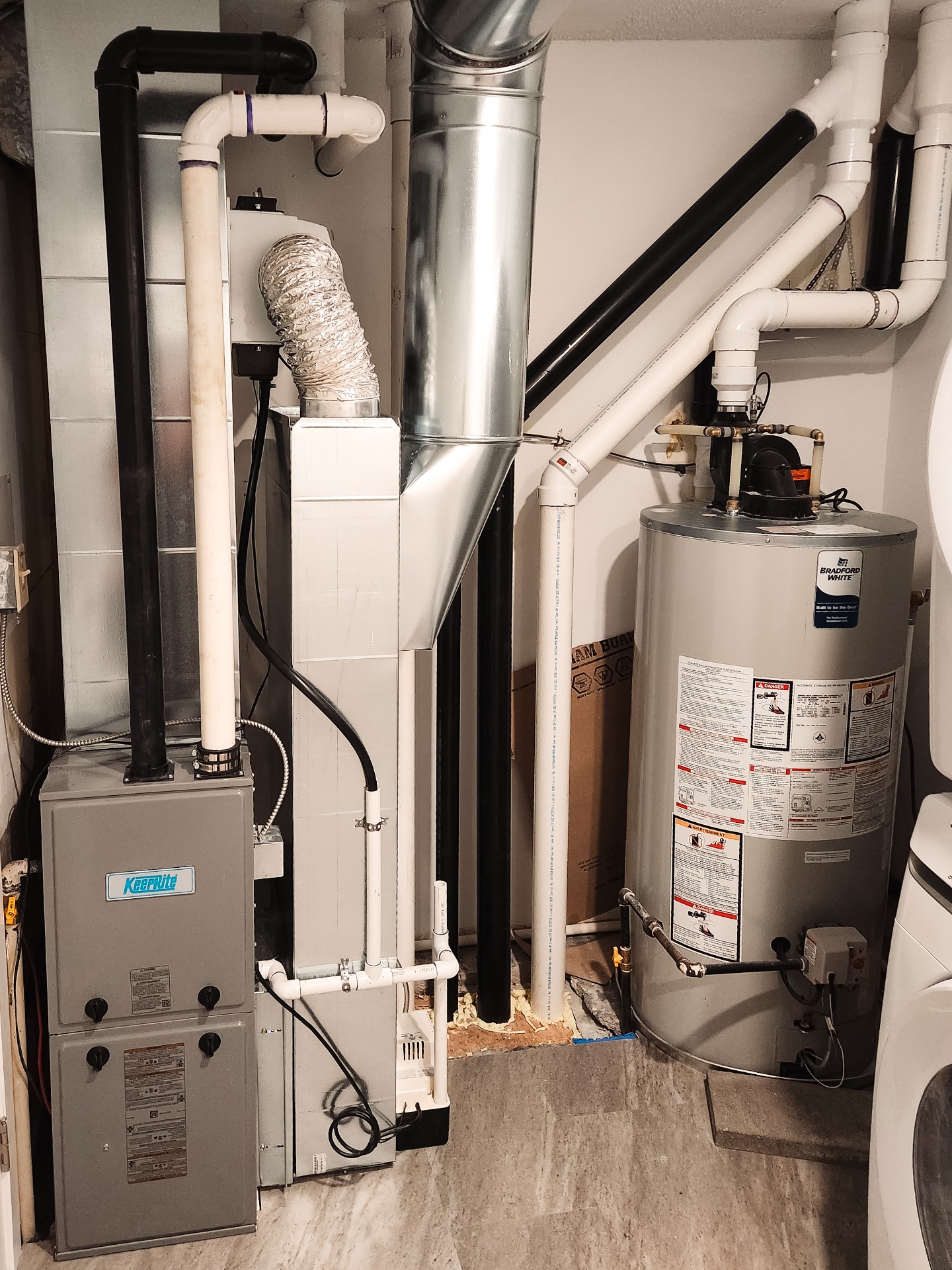
Calgary’s heating season runs from approximately October through April, with the most demanding months — December through February — placing the heaviest load on residential heating systems. A furnace that has not been serviced in a year or more going into that season is a furnace that may not make it through without a breakdown. Annual furnace servicing is not optional maintenance; in Calgary’s climate, it is the difference between a system that performs reliably when you need it most and one that fails at the worst possible time.
A proper furnace service includes cleaning the heat exchanger, inspecting and cleaning the burners, checking the igniter and flame sensor, testing safety controls, measuring combustion efficiency, and inspecting the flue for blockages or damage. A dirty flame sensor is one of the most common causes of furnace failures that look like major problems but are actually simple fixes — and a thorough annual service catches this before it causes a failure during the first cold snap.
Furnace filters need to be changed at minimum every three months during the heating season, and more frequently in homes with pets, multiple occupants, or renovation activity that generates dust. A clogged filter restricts airflow enough to cause the heat exchanger to overheat, which triggers safety shutoffs and — over time — causes heat exchanger cracks that can allow combustion gases to enter the living space. The filter is the cheapest component of the entire heating system; replacing it regularly is one of the most cost-effective maintenance actions available.
Hot Water System Checks
Calgary’s water is relatively hard, with mineral content that causes scale buildup in hot water tanks and tankless heaters over time. Scale acts as insulation on heating elements and heat exchanger surfaces, reducing efficiency and — in severe cases — causing premature equipment failure. Annual flushing of a conventional hot water tank removes accumulated sediment from the bottom of the tank and is a straightforward DIY or service task that extends tank life meaningfully. Tankless heaters benefit from annual descaling with a vinegar flush, particularly in Calgary’s water conditions.
Check the pressure relief valve on the hot water tank annually to confirm it operates freely. The pressure relief valve is a safety device that releases pressure if the tank overheats; a valve that has never been tested may have corroded in place and will not function if needed. Testing it — by lifting the lever briefly to confirm it moves freely and releases water — is a thirty-second check that confirms a critical safety component is functional.
Why Professional Service Is Worth It for Calgary Homeowners
The case for professional plumbing and heating maintenance is straightforward in Calgary’s climate: the cost of a missed maintenance item is dramatically higher than the cost of having it checked properly. A plumber or heating technician who inspects and services a home’s systems annually catches the things that homeowners miss — the corroding water line fitting that is about to fail, the furnace inducer motor that is drawing too much current and approaching end of life, the pressure differential that indicates a developing blockage in the main drain line.
ER Plumbing N Heating provides professional plumbing and heating service across Calgary, including seasonal maintenance, emergency response, and the full range of residential plumbing and HVAC work. When something goes wrong in a Calgary winter — and eventually, something always does — having a relationship with a responsive, capable trade company is not a luxury. Reach them at 587-777-3164 or info@erplumbingnheating.ca. Follow on Instagram and Facebook.