

A furnace in Calgary is not optional equipment — it is the system that keeps a home livable through five months of serious winter. When that system fails during a cold snap, the consequences are immediate: a home can drop to uncomfortable temperatures within hours and to potentially dangerous temperatures within a day in extreme conditions. The irony is that most furnace failures are preventable. The issues that cause the majority of Calgary residential furnace breakdowns are the direct result of deferred maintenance that a properly serviced system would not have experienced.
Understanding how your furnace works, what it needs to operate reliably, and the warning signs that precede most failures gives Calgary homeowners the ability to stay ahead of this system rather than being caught off guard by it. This guide covers what you need to know — practically and without unnecessary technical complexity.
How Calgary Residential Furnaces Work and Why It Matters
The vast majority of Calgary homes use natural gas forced-air furnaces. Gas burns in the heat exchanger, which heats the air passing over it; the blower motor then pushes that heated air through the duct system and into the living space. The exhaust gases from combustion exit through the flue. This is a simple system in concept, but it has several components that require periodic maintenance to continue working reliably — and several failure modes that create safety concerns beyond the inconvenience of a cold house.
The heat exchanger is the most critical and the most expensive component in the furnace. It is a metal chamber that contains the combustion process and transfers heat to the circulating air without allowing combustion gases to mix with the air going into the home. A cracked heat exchanger is a serious safety hazard because it allows carbon monoxide — produced by incomplete combustion — to enter the home’s air supply. Heat exchanger cracks are typically caused by thermal stress from restricted airflow over many years, which is why consistent filter replacement is not just an efficiency measure but a component-life measure.
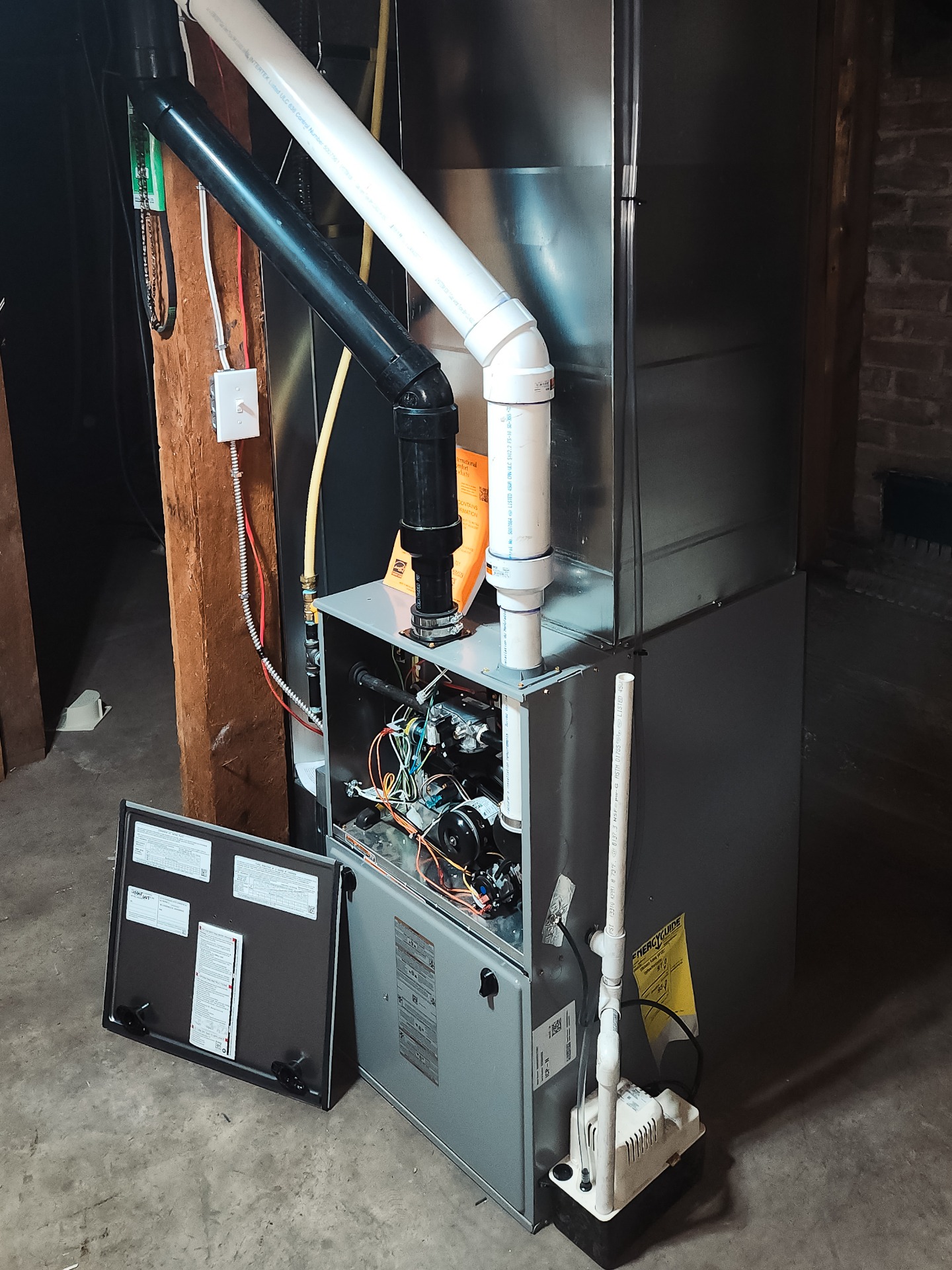
High-efficiency furnaces — the 90-percent-plus efficiency units that are standard in most Calgary homes built in the last twenty years — add a secondary heat exchanger that extracts additional heat from the combustion gases before they exit. These furnaces exhaust through PVC pipes rather than a traditional metal flue, and they produce condensate water that drains through a trap. The condensate drain is a maintenance point that is often overlooked: a blocked condensate drain causes the furnace to shut down on a safety fault, which looks like a furnace failure but is actually a simple blockage to clear.
Annual Service: What It Should Include
A thorough annual furnace service is a defined scope of work, and knowing what that scope includes helps homeowners evaluate whether they are getting genuine value from a service contract or a service call. The heat exchanger should be visually inspected for cracks and tested for leaks using combustion analysis. The burners should be removed, inspected for carbon deposits and corrosion, and cleaned. The igniter and flame sensor should be tested and cleaned — the flame sensor is a small rod that confirms combustion is occurring, and it accumulates a coating of oxide that causes intermittent ignition failures when it gets dirty enough.
The inducer motor — which draws combustion gases through the heat exchanger and out the flue — should be inspected for bearing wear, which manifests as a rumbling or squealing noise during operation and indicates an approaching failure. The blower motor and wheel should be inspected and cleaned; a dirty blower wheel is significantly less efficient and contributes to overheating. Safety controls — the high-limit switch, the pressure switches, the rollout switches — should be tested to confirm they respond appropriately. The flue should be inspected for obstructions, corrosion, or proper slope that ensures condensate drains correctly in high-efficiency systems.
A technician who completes all of these steps, documents the condition of each component, and discusses the findings with the homeowner is providing a service that has genuine preventive value. A “furnace tune-up” that consists of replacing the filter and checking the thermostat is not this service, regardless of what the invoice says.
Warning Signs That Precede Most Furnace Failures
Furnaces rarely fail without warning. The warning signs are often subtle enough to be ignored, attributed to something else, or simply not recognized for what they are — but they are consistently present in the weeks or months before a breakdown. Unusual noises during operation — rumbling that was not there before, a clicking or banging at startup, a squealing sound when the blower is running — all indicate mechanical issues that are developing rather than sudden failures that appeared without warning.
Inconsistent heating — rooms that are noticeably cooler than they used to be at the same thermostat setting, temperature variation between floors that has gotten worse — can indicate duct issues, blower problems, or declining heat exchanger efficiency. A furnace that runs more frequently or for longer cycles to maintain the same temperature is working harder than it used to, which means something has changed — whether that is filter restriction, mechanical wear, or a developing heat exchanger issue.
Yellow or orange burner flames, visible through the inspection window, indicate incomplete combustion that can produce carbon monoxide. The burner flame on a properly operating natural gas furnace should be stable and predominantly blue. Yellow flames, flickering at startup that takes longer than a second or two to stabilize, or a distinct sulfur or metallic smell when the furnace is running all warrant immediate professional inspection.
Knowing When to Repair Versus Replace
Calgary furnaces have a typical service life of fifteen to twenty-five years with proper maintenance. When a furnace requires a significant repair — heat exchanger replacement, inducer motor, control board — the repair-versus-replace calculation depends primarily on the age of the unit and its overall condition. A rule of thumb used by HVAC professionals is the 50-percent rule: if the repair cost exceeds 50 percent of the replacement cost and the unit is more than fifteen years old, replacement is generally the better investment.
A new high-efficiency furnace also delivers ongoing operating cost savings that offset part of the replacement cost over its service life. A fifteen-year-old furnace with an efficiency rating of 80 percent costs meaningfully more to operate than a new 96-percent-efficiency unit, and over a Calgary heating season that runs five to six months, that operating cost difference adds up.
ER Plumbing N Heating provides comprehensive furnace maintenance, repair, and replacement services across Calgary. Whether you need an annual service to keep your system running reliably through winter or an emergency response to a system that has stopped working, their team brings the expertise and the responsiveness that Calgary’s climate demands. Reach them at 587-777-3164, info@erplumbingnheating.ca, or follow on Instagram.
Your furnace is the most important mechanical system in your Calgary home. Treating it accordingly — with consistent maintenance and prompt attention to warning signs — is the most cost-effective home management decision you can make.